 Ten Toe Express
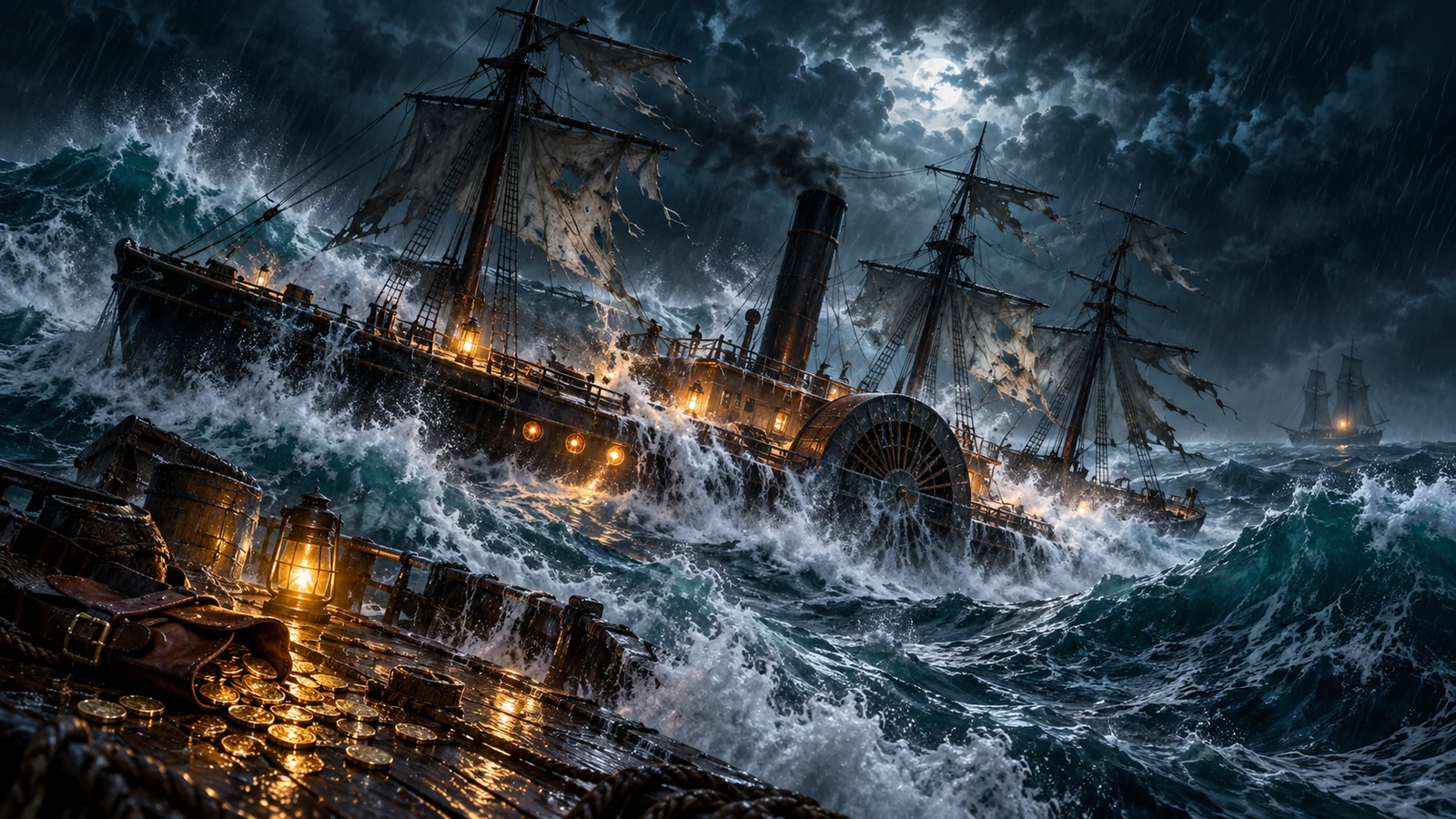
Picture it. September 12, 1857, somewhere off the Carolinas. A big sidewheel steamer is lying over in a hurricane, her engine dead, her sails in rags, and the sea climbing in faster than a line of exhausted men can bail it out. Below their feet is a hold full of California gold. Around their waists, a lot of them are wearing their own. And one by one, as it sinks in that the ship is going down and the water is coming for them, they start doing something that would have been unthinkable a week earlier: they take the gold off and drop it.
That ship was the SS Central America, the "Ship of Gold," and she carried one of the richest cargoes ever lost at sea, gold dug out of the California Gold Rush and headed for the banks of New York. Most of the people aboard died. The ones who lived lost nearly everything they had carried home. And ever since, the story has kept growing new chapters: a financial panic, a whispered legend that survivors buried what was left of their gold along the Northern California coast, a brilliant treasure hunter who found the wreck, and 500 gold coins that are, rather awkwardly, missing all over again.
Right then. Time to separate the gold from the fool's gold.
California gold heads east
By the mid-1850s, the California Gold Rush had turned San Francisco into a booming port with one big problem: everything it dug up needed to get back east. There was no railroad across the continent yet. The quickest route home was a three-part relay. You took a steamer down the Pacific to Panama, crossed the isthmus by rail, and caught another steamer from the Caribbean side up to New York.
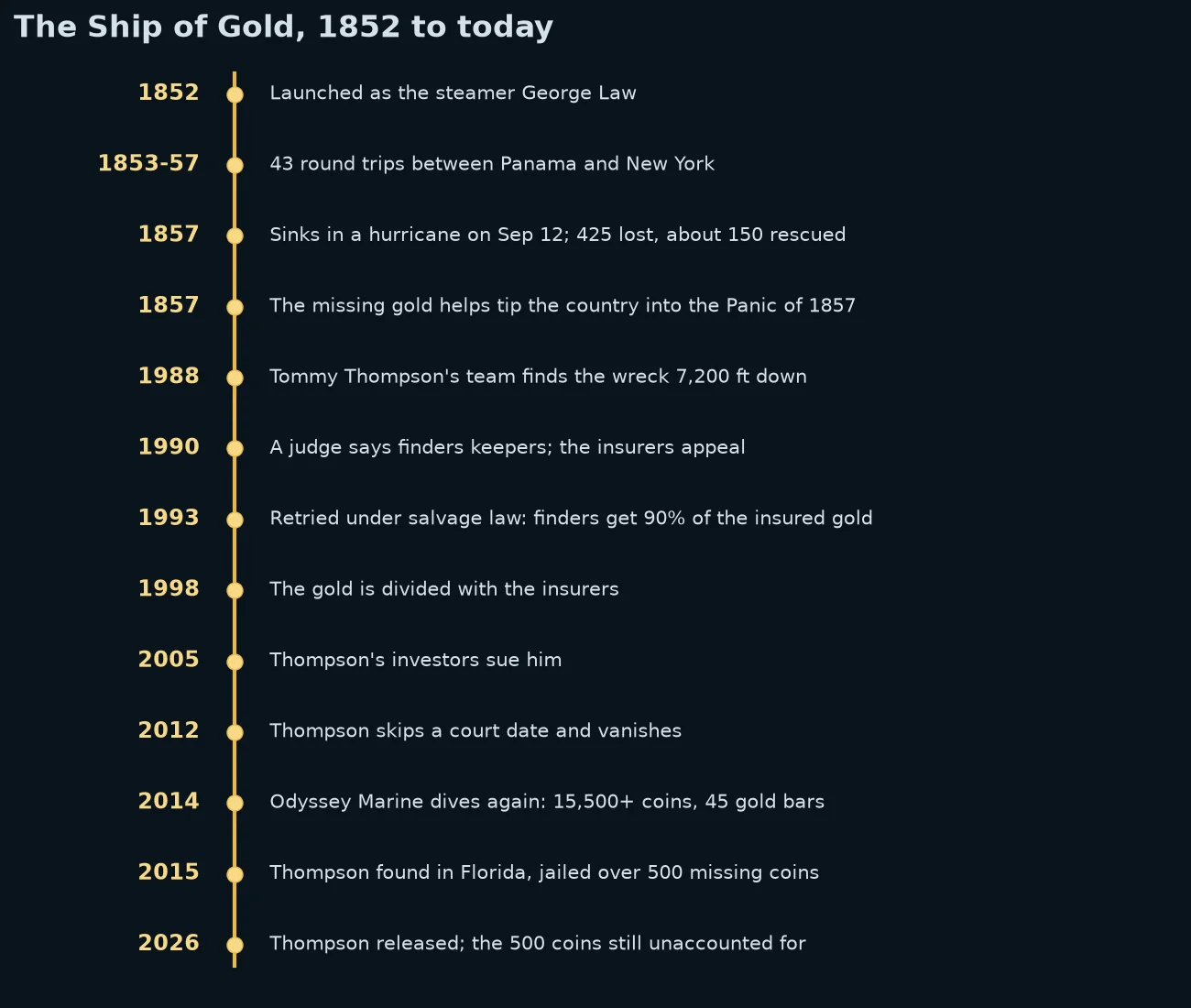
The SS Central America ran that last leg. She was launched in 1852 as the George Law, a long wooden sidewheeler with paddle wheels on her flanks and masts for sails, and she made 43 round trips between Panama and New York. Over her working life she carried a huge share of the gold coming out of California by that route, with several accounts putting it at around a third.
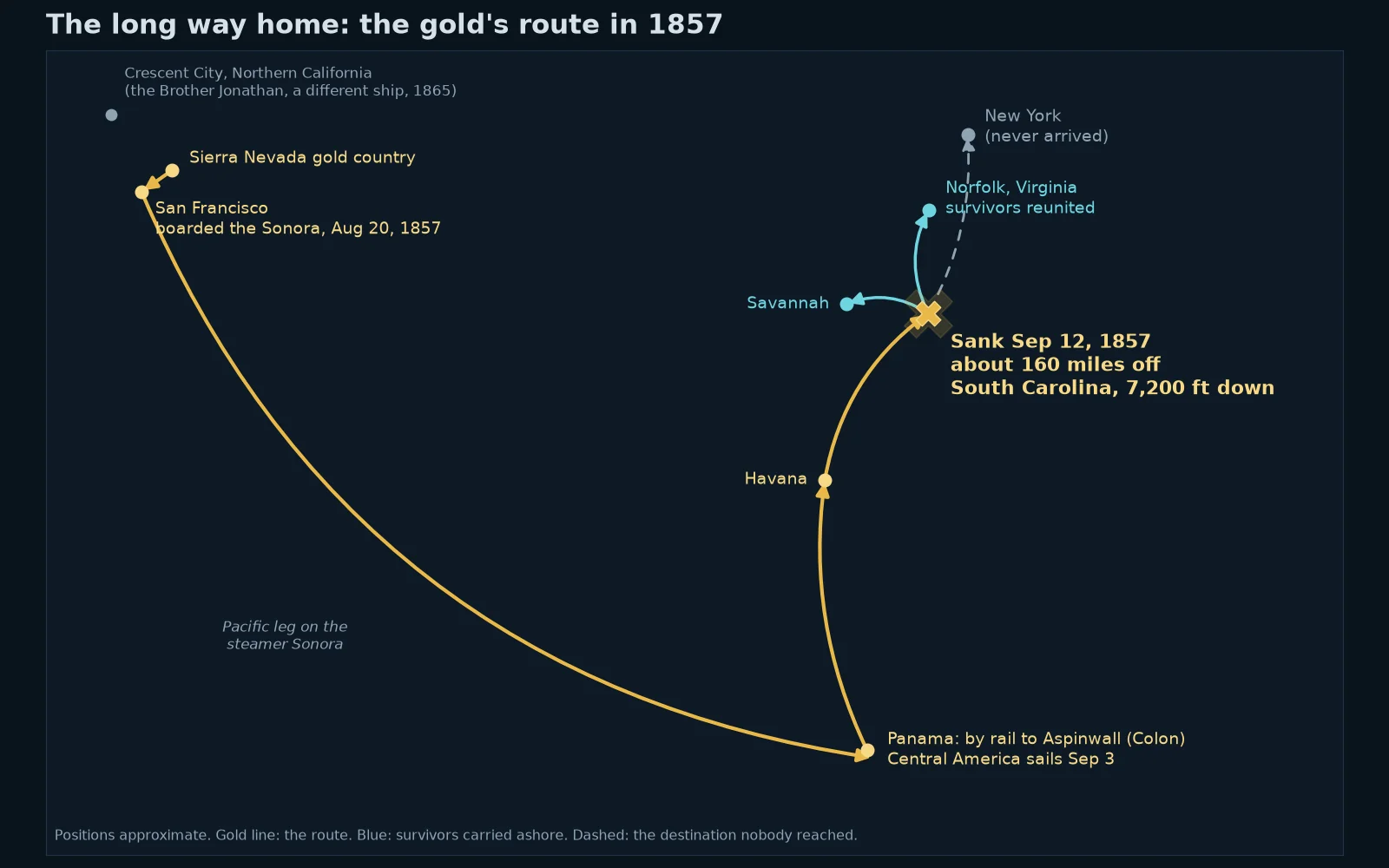
In August 1857, most of her final passengers boarded the steamer Sonora in San Francisco on August 20, rode down to Panama, crossed by train to Aspinwall (today's Colón), and on September 3 climbed aboard the Central America. After a stop in Havana, she headed north with 477 passengers and 101 crew. Many were miners and businessmen going home with their fortunes, some newly married, some bringing home wives and children.
And the gold? Here the sums get slippery. Estimates of the total aboard run from about ten tons to around 15 tons (30,000 pounds, the figure you see most often). The insurers who later fought over it said they had paid out on roughly $1.2 million in insured gold at 1857 values. On top of that came the passengers' own gold, which nobody ever properly counted: nuggets, gold dust, coins and bars tucked into belts, trunks and carpetbags. That uncounted, personal gold is the treasure at the heart of this story.
The hurricane
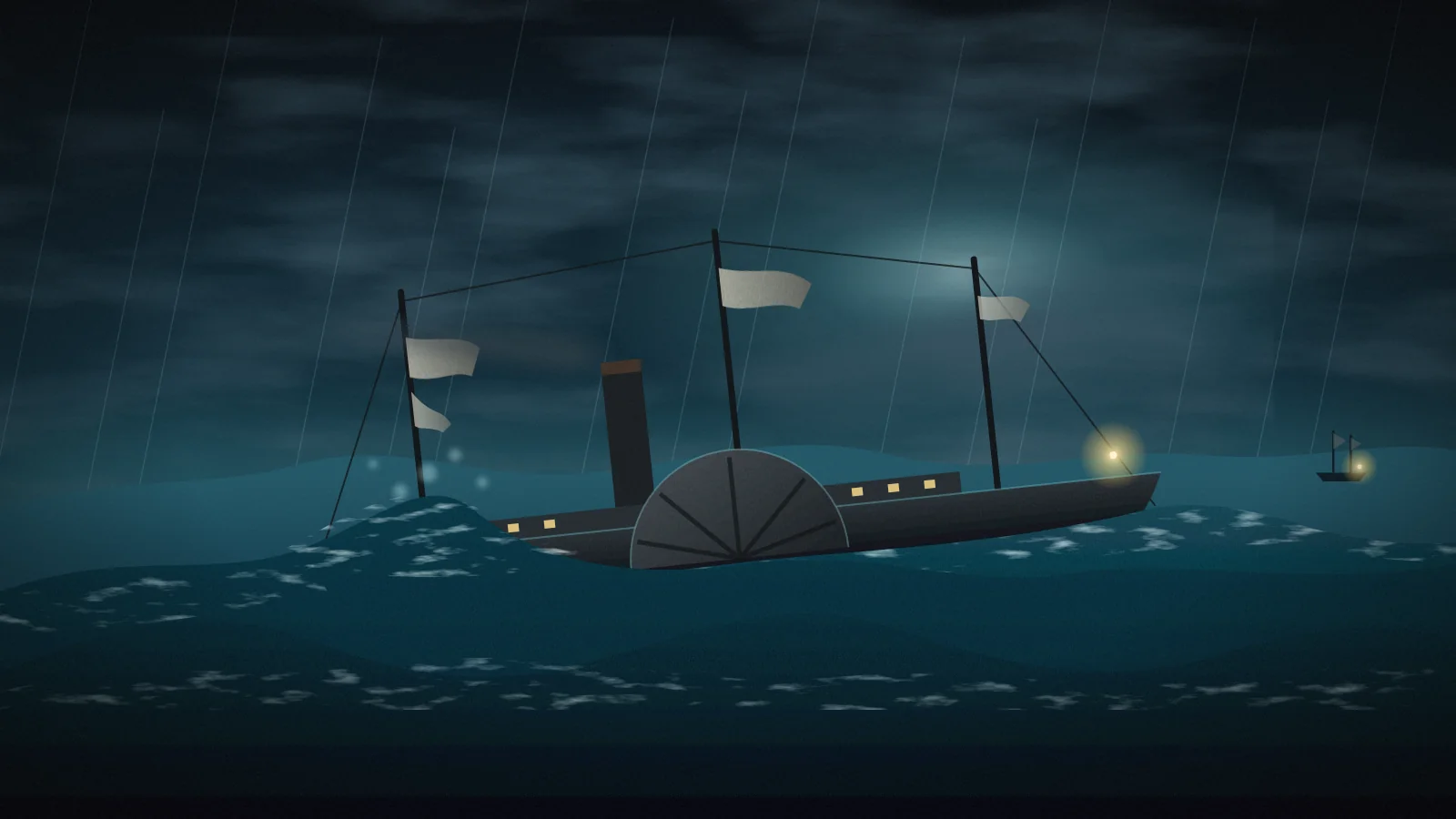
On September 9, six days out, the Central America sailed into a hurricane off the Carolina coast. Modern estimates put it at Category 2 strength, with winds around 105 miles an hour.
Her captain was William Lewis Herndon, a 43-year-old Navy officer with nearly three decades at sea, best known for leading an expedition down the Amazon in 1851. He was about to need every bit of it. The ship sprang a leak nobody could find, she began to list, and as the water rose it reached the boilers and put out the fires. With no steam, the paddle wheels stopped, and a ship with no power in a hurricane is simply a very large, very heavy thing at the mercy of the sea.
The passengers formed bucket lines and bailed for hours on end, men alongside crew, through the night and into the next day. Some accounts say a woman put on trousers and pitched in with the crew. They flew the flag upside down as a distress signal. Nobody came.
Gold belts on the deck
This is the scene that gives the story its name, and it's documented, not invented by a campfire.
As the ship settled lower, the men aboard faced a hideous bit of arithmetic. A miner's savings in gold could weigh many pounds. In the water, that weight would drag a man under. Survivors described men stripping off their money belts and leaving fortunes behind. One of them, a survivor named William Chase, later recalled that "many a man unbuckled his gold-stuffed belt" and flung it down on the deck.
Think about that for a moment. These were people who had spent years in the gold fields to earn that gold. Some of it was lying loose on the planks of a sinking ship, worth nothing at all to anyone who wanted to live.
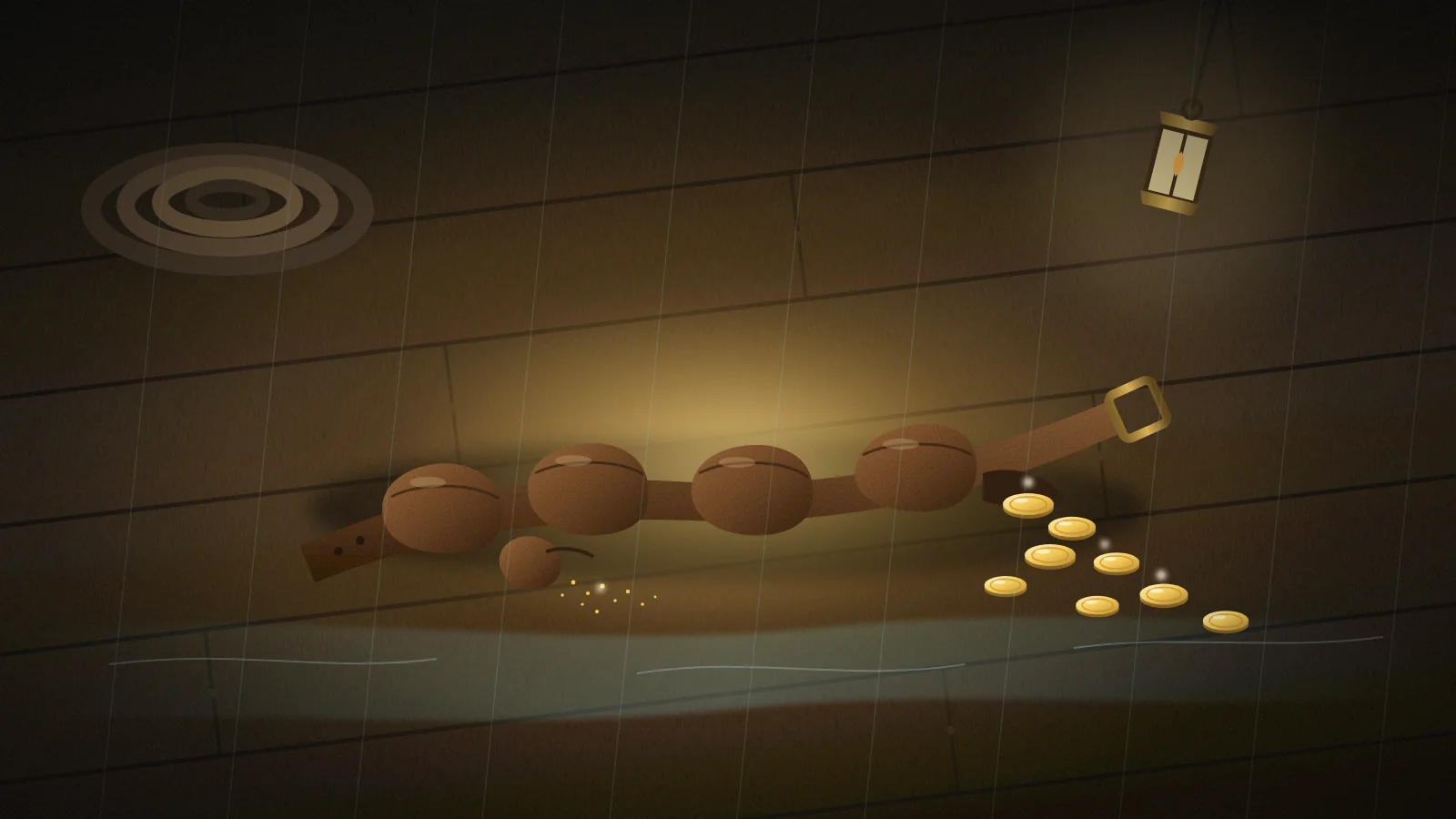
Hold on to that image, because it's the most important clue in the whole "survivors' treasure" mystery. A great deal of the survivors' gold didn't go anywhere. It stayed on the ship.
The rescue: women and children first
On September 12, a small brig, the Marine of Boston, came within reach, battered by the same storm. Herndon ordered the women and children into the lifeboats, and the crew rowed them across the heaving sea. Around 100 people were taken off this way before the weather pushed the Marine out of reach.
One of the women was Adeline Easton, a newlywed. Her husband, Ansel, took off his coat, kissed her goodbye and went back to work bailing. Adeline later recalled the captain telling her he would never survive his ship, and that if she went down he would go down with her.
He meant it. At about 8 p.m. on September 12, the Central America sank, taking hundreds of people with her. Herndon was last seen near the wheelhouse.
Then came the luck, such as it was. The next morning a Norwegian ship, the Ellen, changed course and found survivors in the water, pulling about 50 men out alive. Three more were found in a lifeboat more than a week later. In all, about 150 people survived. 425 did not.
Ansel Easton was among those saved. He and Adeline were reunited about a week later at the National Hotel in Norfolk, Virginia, which is about as happy an ending as this story gets. Other survivors reached shore elsewhere; a ship arriving at Savannah, Georgia, brought in five, according to a Charleston newspaper of the time. Newspapers from that week don't even agree on the rescue figures, which tells you how chaotic it was.
The gold that crashed a country
The loss didn't stop at the drowned and the ruined. Banks in New York had been counting on that gold arriving. When the Central America went down, it did not cause the Panic of 1857 on its own, but it pushed an already nervous system off a cliff. Confidence in the banks cracked, and the country slid into a serious depression. One shipwreck, one hurricane, and Wall Street had a very bad autumn.
The legend: survivors' gold buried in Northern California
Now for the story told in the Ten Toe Express Short. According to the legend, gold rush miners who survived the wreck were rumoured to have buried their remaining gold along the Northern California coast, and it's still out there somewhere.
It's a cracking idea. Here's the catch, and it's a big one: the geography doesn't work. The Central America sank in the Atlantic, off the Carolinas, nearly the whole width of the continent away from Northern California. Her survivors were carried to places like Norfolk, Virginia, and Savannah, Georgia. Many of them came ashore having lost most or all of what they owned, because their gold had gone down with the ship or been dropped on the deck. To bury gold on the California coast, a survivor would have had to keep hold of it through a hurricane, then haul it back across the country to the place he had just left. No record found for this article mentions anyone doing that, and the major histories of the wreck don't mention any such legend.
So where might the story have come from? A few honest possibilities:
- The gold came from California. The passengers started their trip in San Francisco with gold from the Sierra Nevada, so the "California gold" part is entirely true. It's a short hop for a retelling to move the treasure back to where it was dug up.
- Northern California has its own shipwreck gold. In 1865 the steamer Brother Jonathan struck a rock on St. George Reef and sank about four miles off Point St. George, just north of Crescent City. Over 200 people died, only 19 survived in a single lifeboat, and the ship reportedly carried gold, including an army payroll in newly minted coin. A different ship, a different coast, a different decade, but a story that sounds an awful lot like this one.
- Gold-rush buried-treasure tales are everywhere. California is full of them, and a famous name like the Ship of Gold makes any of them sound grander.
The fair verdict: as far as the records go, the survivors' treasure ended up on the ocean floor, not under a California beach. The buried-gold legend is a legend. Lovely to tell, impossible to pin down, and rather inconvenient for anyone with a metal detector and a free weekend.
Tommy Thompson finds the Ship of Gold
For more than a century, the Central America sat in the dark, too deep for anyone to reach. Then came Tommy Thompson, a treasure hunter from Ohio with a scientific streak and a lot of nerve.
Thompson's Columbus-America Discovery Group spent around four years and about $10 million of investors' money on the search. Rather than just mowing the seabed with sonar and hoping, the team used a mathematical method called Bayesian search theory, weighing old accounts of the sinking, the drift of the rescue ships and the weather to work out where the wreck was most likely to be. In September 1988 they sent a remote-controlled underwater robot down about 7,200 feet, more than a mile, and there she was.
What they found was almost absurd. Gold coins lay heaped on the seabed, along with gold bars from a few ounces to many pounds, rare privately struck "pioneer" gold from early California, and sparkling, never-circulated coins from the San Francisco mint. Thompson described the scene in terms of rivers and carpets of gold, and for once nobody accused a treasure hunter of exaggerating.
It wasn't only coins. Over the years the wreck has given up daguerreotype photographs, personal belongings, what's been called the oldest known pair of denim jeans, and even the Eastons' own steamer trunk, its clothes remarkably well preserved. The ship's 268-pound bell was raised in 1988 and later donated to the US Naval Academy, where it was dedicated in 2022. And one huge gold ingot from the wreck later sold for a reported $8 million.
Finders keepers? The courts say no
You might think the hard part was over. Brilliant. Wrong.
Almost as soon as the gold came up, 39 insurance companies, including names from Lloyd's of London, went to court. They had paid out claims on the lost gold back in 1857, they argued, so the gold was theirs. Thompson's team said the insurers had long since abandoned it.
- 1990: A federal judge in Virginia applied the "law of finds" (finders keepers, more or less) and gave Thompson's group the lot.
- 1992: A divided federal appeals court said the judge had used the wrong rulebook and sent it back to be decided under salvage law instead, which rewards finders without simply handing them the cargo.
- 1993: Retried under salvage law, Thompson's group was awarded 90 percent of the gold the insurers had claimed. An appeals court upheld that in 1995.
- 1998: The two sides finally divided the treasure.
Thompson's team got the lion's share, and a big batch of the gold was sold for about $50 million. Happy ending? Not even slightly.
The 500 missing coins
In 2005, investors who had paid for the search sued Thompson, saying they had never seen a return from that $50 million sale. Crew members sued him as well. Thompson said most of the money had gone on legal fees and loans.
In 2012, Thompson skipped a court date and disappeared. For more than two years, the man who had found the Ship of Gold was a fugitive. In January 2015, US Marshals tracked him to a hotel in Florida, where he was found with his assistant, Alison Antekeier.
That's where the modern lost treasure enters the story. A court wanted to know what had happened to 500 gold coins minted from the ship's gold, valued at about $2.5 million. Thompson said he didn't know where they were, and that they had been handed over to a trust in Belize. The judge didn't buy it and held him in contempt, jailing him until he answered. Federal law usually caps contempt jail time at 18 months, but a 2019 appeals ruling said his case was different because he had broken the terms of a plea deal.
He stayed locked up for more than a decade. In 2018 a jury awarded his investors $19.4 million. Eventually a judge decided jail clearly wasn't going to produce an answer, ended the contempt sentence, and Thompson served a separate sentence for skipping that 2012 court date. He was released in March 2026, in his early seventies.
The coins? Still unaccounted for. Gold from the Ship of Gold has now gone missing twice: once in a hurricane, and once somewhere in the paperwork. You couldn't make it up, and thankfully nobody has to.
The second dive: going back for the passengers' gold
Here's a twist that matters for the survivors' treasure. Thompson's original expedition only excavated a small slice of the wreck site, often put at about five percent. In 2014, a court-appointed receiver hired Odyssey Marine Exploration of Tampa to go back down.
Before the dive, experts estimated what might be left. The remaining commercial gold was put at only about $93,000 in 1857 money. The interesting number was the passenger gold: somewhere between $250,000 and $1.28 million at 1857 face value, with about $760,000 judged the most likely figure for everything left. In other words, the belts, pokes and purses the passengers lost were thought to be the bulk of what remained.
Odyssey's first dive in April 2014 brought up five gold bars and two $20 gold coins. By the end of that phase in September, it reported more than 15,500 gold and silver coins, 45 gold bars, gold nuggets and jewellery, plus the little things that make a wreck human: perfume bottles, glass stemware, clay pipes, the remains of a music box and chewing tobacco still in its package.
So where is the survivors' treasure? The theories, weighed
- On the seabed, off South Carolina. The strongest theory by a mile. Survivors described men leaving their gold on deck, and the experts who planned the 2014 dive expected passenger gold to make up most of what was left. Some of it has come up; some may still be down there.
- Carried ashore by a lucky few. Possible. Some survivors may well have kept a little gold on them, but no source found for this article names anyone who came home with a fortune intact.
- Buried on the Northern California coast. The legend in the Short. There's no evidence for it, and the geography is against it: the ship sank on the other side of the country, and the survivors landed on the East Coast. If gold is buried on that coast, it's more likely to belong to a different story, like the Brother Jonathan.
- The 500 missing coins. Not the survivors' gold exactly, but made from the ship's treasure, and the one genuinely lost hoard in this story with real paperwork behind it. Thompson says Belize. Nobody has proved where.
The honest answer? Most of the survivors' treasure was lost at sea in the worst way, and some of the rest has been recovered, sold and fought over. The buried-gold-in-California version is the part with the least evidence and the most charm.
Where the SS Central America stands today
- The wreck lies about 160 miles off South Carolina, around 7,200 feet down, far beyond the reach of any diver. Recovery rights have been controlled through the federal courts for decades, and the company Recovery Limited Partnership was ruled the legal owner of the shipwreck. Not one for a weekend dive, then.
- The ship's bell now belongs to the US Naval Academy in Annapolis, Maryland, a fitting home given Herndon was a Navy man.
- Coins and bars from the wreck have been sold, collected and exhibited for years; if you see one for sale, it'll come with a price tag to match the legend.
- The Northern California coast is a gorgeous place to chase a story, and the Del Norte County Historical Society museum in Crescent City displays a gold coin and other items from the Brother Jonathan. Much of the coast is park land or private property, so enjoy the views, and leave the shovel at home.
The gold rush is long over, and the Ship of Gold has given up most of her secrets. But somewhere between a sinking deck in 1857, a trust in Belize and a California beach full of rumours, a little of that treasure is still lost. Which is, frankly, exactly how a good treasure story should be.
...and if you find it, remember who encouraged your questionable life choices.
The short version of this story is on YouTube at @TenToeExpress.
Deep dive yourself
- How one shipwreck and a cargo of lost gold sparked a U.S. financial panic, by Roff Smith (2025) · National Geographic
- A Golden Mystery: A Lost Ship and Gold Riches Found off the Carolina Shore, by Harlan Greene (2025) · Charleston Magazine
- A Fortune Lost at Sea: Ship Sinks with CA Gold Rush Treasure (with 1857 newspaper reports) · GenealogyBank
- California Gold Rush Continues in Virginia Courtroom, by Douglas Frantz (1990) · Los Angeles Times, via The Seattle Times
- Columbus-America Discovery Group v. Atlantic Mutual Insurance Co. (4th Cir. 2000) · FindLaw
- Treasure Hunters to Recover Gold Cargo from SS Central America Shipwreck (2014) · gCaptain
- Salvagers Tally Up Treasures From Sunken 'Ship of Gold', by Stephanie Pappas (2014) · Live Science, via NBC News
- Man hailed as a hero for finding the Ship of Gold, then jailed for losing the coins, now released (2026) · Associated Press, via Fortune
- The S.S. Brother Jonathan · Del Norte County Historical Society
- SS Central America · Wikipedia (a good starting point, with references to Gary Kinder's book Ship of Gold in the Deep Blue Sea)